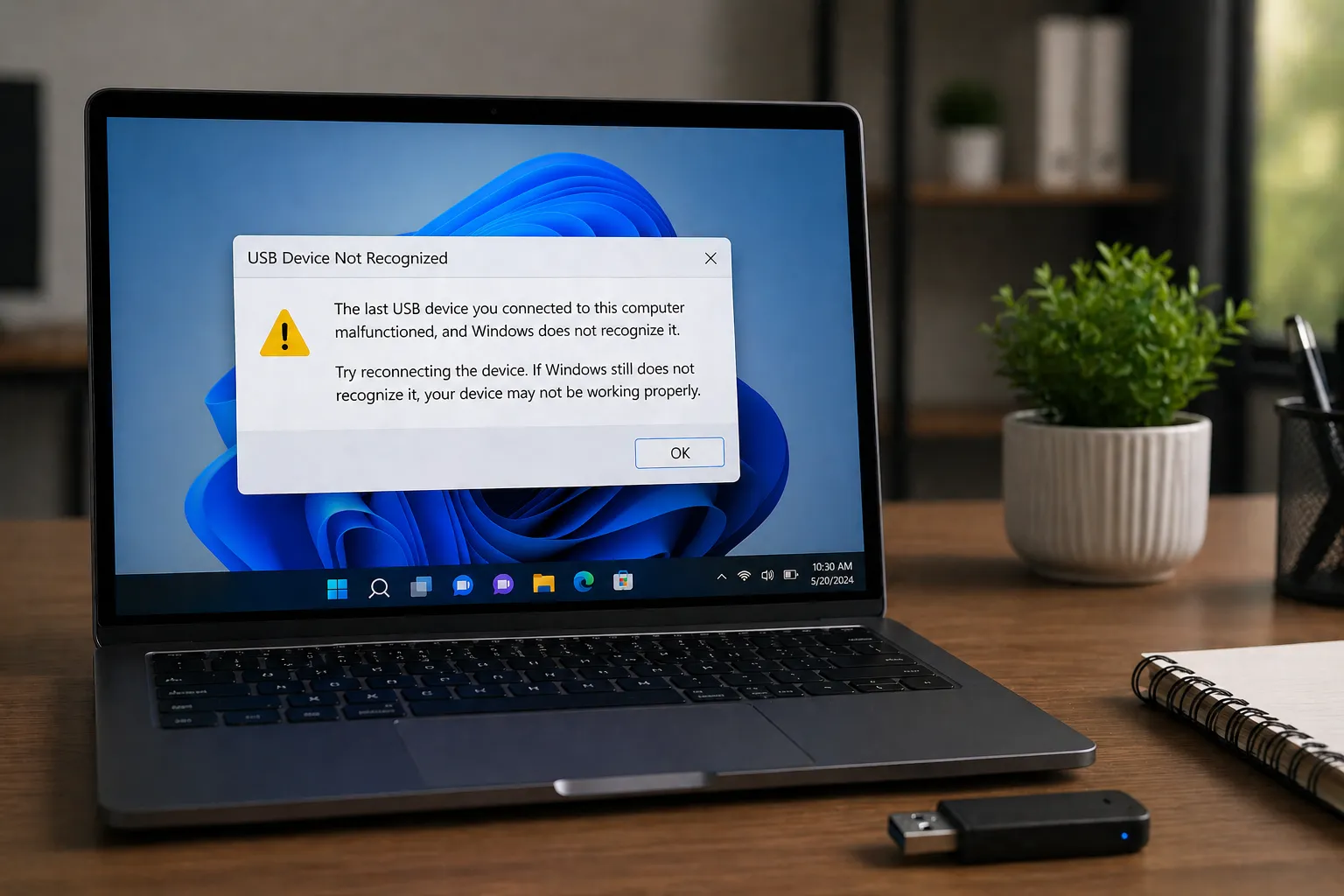
USB drivers help organize communication between the operating system, USB host controllers, storage devices, accessories, charging hardware, and connected peripherals.
Understanding USB communication
USB communication relies on host controllers that help coordinate how devices exchange data with the operating system. Drivers help organize this communication so keyboards, storage devices, webcams, printers, and many other peripherals can function correctly.
Simple idea
USB drivers help the operating system understand how connected devices should exchange information through USB pathways.
From EHCI to xHCI
Older USB communication commonly used EHCI controller standards associated with USB 2.0 speeds. Modern systems rely on xHCI controller architecture to organize communication for newer USB generations such as USB 3.x and USB4.
USB Concept
USB 2.0
USB 2.0 introduced higher transfer rates than early USB generations and became widely used for keyboards, mice, and storage devices.
USB Concept
USB4
USB4 communication supports modern high-bandwidth pathways designed for advanced data, display, and device communication.
Why bandwidth matters
USB generations differ in how much data they can transfer over time. Bandwidth concepts help explain why modern storage devices, displays, docking stations, and external hardware benefit from newer USB communication standards.
Concept Flow
Operating System → USB Controller → Connected Device
The operating system communicates with the USB controller, and the controller organizes data exchange with connected devices.
USB-C and reversible communication
USB-C introduced a reversible connector design along with support for advanced communication pathways. USB-C can carry data, display signals, and power depending on the supported hardware and controller capabilities.
Understanding power negotiation
Modern USB-C communication may include power negotiation concepts where connected devices exchange information about charging levels and supported power behavior through dedicated communication channels.